Drone Photos for Short-Term Rentals in Quebec (2026)
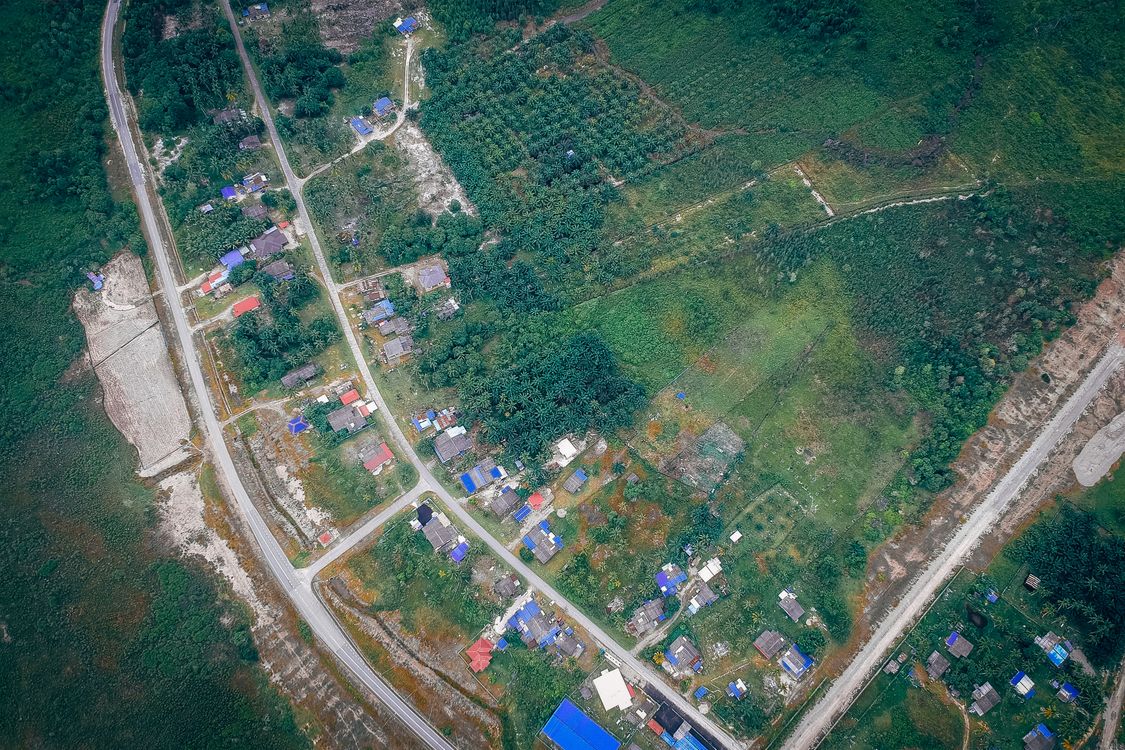
Open Airbnb's own category pages for Vaudreuil-Soulanges and you'll find a dedicated "lake access" and "waterfront" filter alongside the usual house and condo listings — proof that short-term rentals are a real, visible part of this region's housing stock, not a side hustle confined to downtown Montreal. What's changed in 2026 isn't the demand. It's the enforcement: Quebec's tourist accommodation law now requires a government-issued registration number on every short-term rental ad, and provincial inspectors are actively checking for it.
That shift matters for anyone renting out a chalet, a waterfront cottage, or a condo on Airbnb or Vrbo in this market, because it changes who's actually competing for a guest's attention. As non-compliant listings get fined or pulled, the remaining compliant ones compete harder on the one thing a registration number can't fix: whether the photos make someone stop scrolling. Here's what the rules require, what enforcement looks like so far, and when a drone add-on actually earns its cost on a short-term rental listing in this market.
Key Takeaways
- As of September 30, 2025, Revenu Québec had conducted 1,401 inspections of short-term rental operators, found 363 non-compliant, issued 590 statements of offence, and levied more than $1,546,929 in fines under the tourist accommodation law (Revenu Québec inspection statistics).
- A government review of listings posted simultaneously on Airbnb and Vrbo in January and February 2024 found a 90% compliance rate for the required registration number, which the province cited as evidence the law was working (Québec government announcement).
- Platforms that publish an illegal listing risk fines of up to $100,000 per listing, and operators who display a false or inaccurate registration number risk fines of up to $50,000 (Québec government, fines and offences).
- Quebec's tourism ministry announced further regulatory changes on March 25, 2026, with new compliance measures taking effect April 9, 2026 — part of what the province describes as a steady tightening of the rules since 2023.
- Airbnb's own Pro Photography program reports a 19% net increase in bookings over the following year and a 21% average increase in host earnings for Stays listings that used professional photos, based on an analysis of more than 14,700 listings from 2024–2025 (Airbnb, Pro Photography). Airbnb notes results vary and aren't guaranteed, since this is the company's own self-reported data.
Why Quebec Tightened the Rules on Short-Term Rentals
Quebec's Act Respecting Tourist Accommodation treats any stay of 31 days or less, booked through a platform like Airbnb or Vrbo, as tourist accommodation requiring a registration number from the province — the same basic obligation whether the property is a downtown Montreal condo or a lakefront chalet in Rigaud. That six-digit number has to appear in the ad itself, on every platform the property is listed on, not just filed away in a government database somewhere. The rule exists because, before it was enforced, a meaningful share of short-term rental ads in the province simply didn't carry one.
The law also sets real financial stakes for getting it wrong. Platforms that allow an illegal, unregistered listing to stay up risk fines of up to $100,000 per listing, and an operator who displays a fake or incorrect registration number risks a fine of up to $50,000, according to the province's published fines and offences schedule. Those aren't abstract numbers on a government webpage. Revenu Québec's own published inspection data shows the province has been acting on them.
What Enforcement Has Actually Looked Like So Far
As of September 30, 2025, Revenu Québec's published statistics show 1,401 inspections of short-term rental operators completed since the law's inspection regime began, with 363 found non-compliant and 590 statements of offence issued. The total value of fines levied under the law had reached $1,546,929 by that date. Those are provincial totals, not a Vaudreuil-Soulanges-specific breakdown, but they show the enforcement machinery is live and producing real penalties, not just paperwork.
The province's own characterization of the law's early results, published as "concrete results", points to a review of listings posted simultaneously on Airbnb and Vrbo in January and February 2024 that found a 90% compliance rate for the registration-number requirement. Read together with the September 2025 inspection numbers, the picture is a market that's moved from spotty compliance toward something closer to the norm — with real fines attached for the operators who haven't caught up.
Quebec's tourism ministry hasn't stood still since. On March 25, 2026, the ministry announced further changes to the regulation governing tourist accommodation, with new compliance measures taking effect April 9, 2026 — part of what the province describes as a steady tightening of the framework through 2023, 2024, 2025 and into 2026, rather than a one-time law that's since gone quiet.
Why Photo Quality Matters More as the Field Narrows
None of this changes what actually gets a listing booked once it's compliant. It changes who the listing is competing against. As non-compliant ads get fined or pulled, the remaining pool of legitimate listings is competing harder, and more consistently, for the same pool of guests — which raises the value of whatever actually moves a listing up a guest's shortlist.
Airbnb's own data on this is specific. The company's Pro Photography program page reports a 19% net increase in bookings over the following year, and a 21% average increase in host earnings, for Stays listings that used professional photography, based on an analysis of more than 14,700 listings from 2024 to 2025. Airbnb is careful to note these results aren't guaranteed and vary by listing, which is a reasonable caveat for a company marketing its own photography program — but it's a large, recent, specific sample, not a vague claim.
Independent academic research points the same direction, even if the data is older. A study presented at the 2016 International Conference on Information Systems, using machine-learned photo-aesthetic scoring and a difference-in-differences design across Airbnb listings, found that rooms with verified professional photos were booked about 9% more often than comparable listings without them, with a measurable spillover effect on nearby listings once enough of them had upgraded photos too (Zhang, Lee, Singh & Srinivasan, ICIS 2016). That study is a decade old and not Quebec-specific, so treat it as independent historical confirmation of the same pattern Airbnb's current data shows, not a current number on its own.
What a Drone Add-On Actually Shows on a Chalet or Waterfront Rental
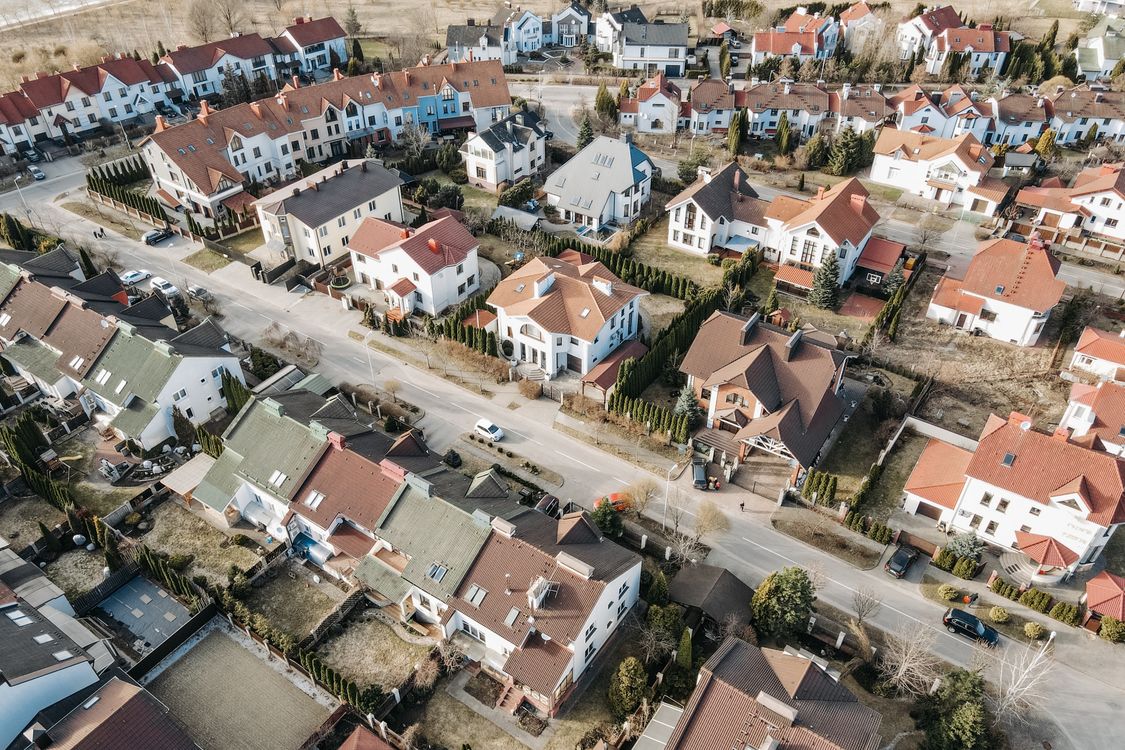
For a standard rented bedroom or a condo in a mid-rise building, interior photos do almost all the work, and a drone adds little a ground shot doesn't already cover. For the waterfront chalets and larger-lot cottages that make up the "lake access" and "waterfront" categories on Airbnb's own Vaudreuil-Soulanges pages, it's a different story — the same logic that makes aerial photography pay off on a waterfront real estate listing applies directly to a waterfront rental listing, because the guest is renting the setting as much as the building.
- Water frontage and the dock: how much shoreline actually comes with the property, and whether there's a usable dock or beach — the single detail a guest comparing five similar-priced chalets usually can't get from interior photos alone
- How private the lot really is: tree cover, distance to the nearest neighbouring cottage, and whether the yard backs onto open water or a shared access point
- The approach and context: a short flight showing the dock, the water, and the surrounding shoreline in one continuous shot, which works equally well as a photo and as raw footage for a short listing video
- Outdoor living space: a fire pit, a large deck, or a backyard big enough for a group — exactly the kind of feature group bookings search for and exactly what a ground-level photo compresses into something hard to judge
Ground photography still carries the interior: bedrooms, kitchen, bathrooms, and the small staging details that make a listing photo-ready. For that side of the shoot, including prep and what a standard listing photography package costs in this market, see our guide to Real Estate Photography in Vaudreuil-Soulanges, which covers the same prep principles whether the listing is for sale or for weekend rental.
Where the Drone Add-On Pays Off — and Where It Doesn't
Not every short-term rental listing in this market needs an aerial shoot. It consistently earns its cost on:
- Waterfront chalets and cottages in and around Vaudreuil-Soulanges, where river or lake frontage is the actual reason a guest is booking, not just a bonus
- Larger-lot rural properties marketed on space and privacy, where a ground photo can't show how much land actually comes with the stay
- Properties competing on a group-booking angle — a backyard, a fire pit, or outdoor space large enough for a family reunion or a group of friends, where scale is the selling point
It earns its cost far less often on a single rented room, a city condo with no outdoor space, or any listing where the interior is genuinely the whole pitch. For that kind of listing, a solid ground-photo set, shot the same way our guide to real estate photography in Vaudreuil-Soulanges describes, covers what a guest actually needs to see. A trustworthy provider says so rather than upselling a flight that won't move the needle.
The Rules for Flying a Drone to Market a Rental Property
Flying a drone to help market a short-term rental is the same commercial operation under Transport Canada rules as flying one for a real estate listing — there's no separate, lighter rule set because the property is being rented by the week instead of sold outright. A compliant operator needs a Transport Canada pilot certificate (almost always the Advanced certificate for work near homes), a registered aircraft, a pre-flight site survey, and liability insurance. For the full breakdown of certificate tiers, airspace rules, and what a compliant operator should be able to show you, see our Quebec drone photography guide rather than repeating it here.
What It Costs
Pricing for a short-term rental shoot follows the same structure used across this market: ground-level real estate photography covers the interior and the base exterior shot list, and a drone photography add-on typically runs $150 to $400 on top, depending on lot size and flight complexity. There's no separate "rental listing" rate — the same certified pilots, the same equipment, and the same site-survey process apply whether the property is headed for Centris or for Airbnb.
Frequently Asked Questions
Does every short-term rental in Quebec need a registration number?
Yes. Quebec's Act Respecting Tourist Accommodation requires a registration number for any stay of 31 days or less booked through a platform like Airbnb or Vrbo, and that number has to appear in the listing itself, not just be on file with the province.
What happens if a short-term rental listing doesn't have a valid registration number?
The operator risks a fine of up to $50,000 for a false or inaccurate number, and the platform hosting an illegal listing risks a fine of up to $100,000 per listing. Revenu Québec had issued 590 statements of offence and levied more than $1.5 million in fines as of September 30, 2025.
Does professional photography actually increase Airbnb bookings?
Airbnb's own data, covering more than 14,700 listings from 2024–2025, reports a 19% net increase in bookings and a 21% average increase in earnings for Stays listings using professional photos, though the company notes results vary and aren't guaranteed. An independent 2016 academic study found a comparable, smaller effect of about 9% more bookings for listings with verified professional photos.
Is a drone add-on worth it for a short-term rental listing?
It depends on the property. Waterfront chalets, larger rural lots, and listings selling on outdoor space for group bookings benefit from an aerial shot that shows what a ground photo can't. A single rented room or a city condo with no outdoor space usually doesn't need one.
Conclusion
Quebec's tourist accommodation law hasn't changed what makes a short-term rental listing appealing — it's changed who's still in the running. With real inspections, real fines, and another round of regulatory changes landing in April 2026, the listings competing for a guest's attention are increasingly the compliant ones, which puts more weight on photo quality as the actual differentiator. For a waterfront chalet or a larger rural property in this region, that often means pairing solid interior photography with an aerial shot that shows the water, the land, and the privacy a guest is really paying for.
Hosts and property managers weighing whether a drone add-on makes sense for a specific rental can request a quote for your property rather than guessing from a generic checklist.
About the author
Pranshu Verma is the founder of Group PV Media, a photography, drone, and video production company serving real estate agents, sellers, and property owners across Vaudreuil-Soulanges, the West Island, Saint-Lazare, Montreal, and Laval, Quebec.
Want to apply this to your business?
Book a free 30-minute call. We’ll look at your situation together and you’ll leave with a clear plan — no commitment.
Book a free consultation